Pre-cleaning & Substrates
GLUE forte

For flawless results: cleaning is the key to perfect adhesion!
Thorough preparation of the substrate is crucial to ensuring optimum adhesion. It is important that the surface is dry and free from grease, dust, limescale and loose particles.
1. Deep clean
A thorough initial clean is essential, particularly for new installations or where there are heavy limescale deposits. Start by removing coarse dirt such as limescale, construction dust and cement residue with suitable cleaning agents.
It is important to note that different substrates may have different requirements when it comes to deep cleaning!
2. Fine cleaning
After a thorough cleaning, the substrate may appear visually clean, but it is not yet completely clean. Standard bathroom cleaners, thinners, methylated spirits or brake cleaners can leave behind residues (such as fragrances or oils) that may impair the adhesive’s bond. They are therefore unsuitable for immediate bonding afterwards.
The bonding surfaces must be thoroughly cleaned to ensure they are clean, dry and free from grease and dust. It is essential to remove any loose particles or residues through thorough cleaning.
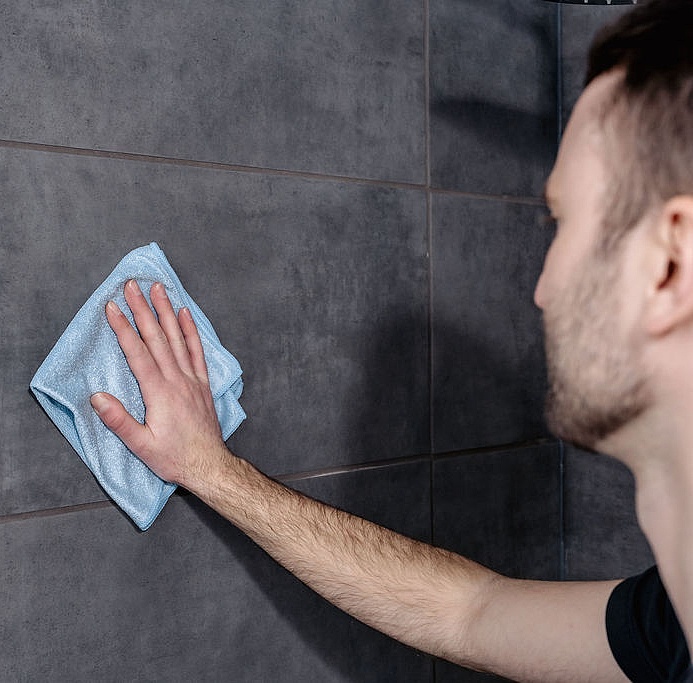
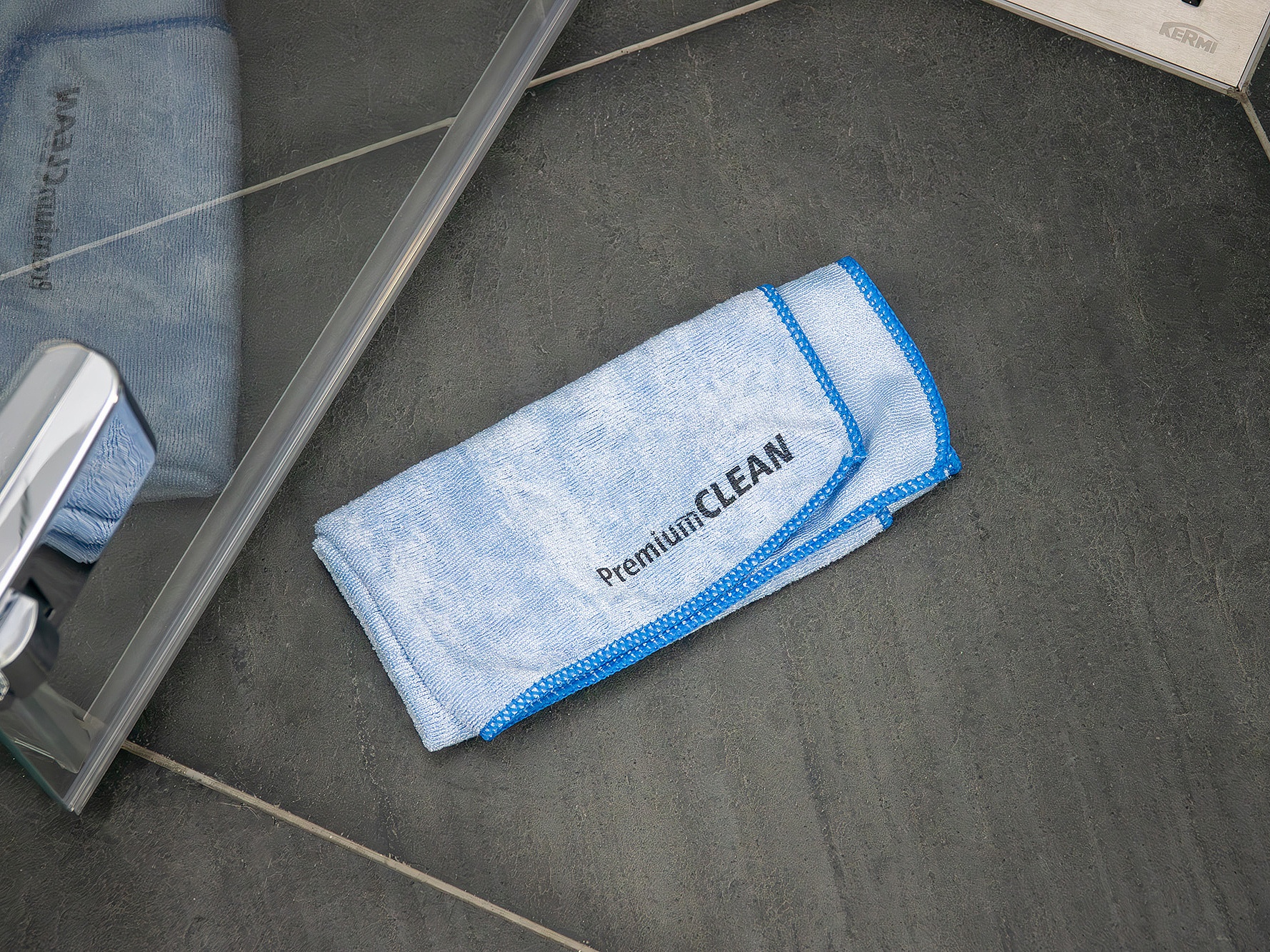
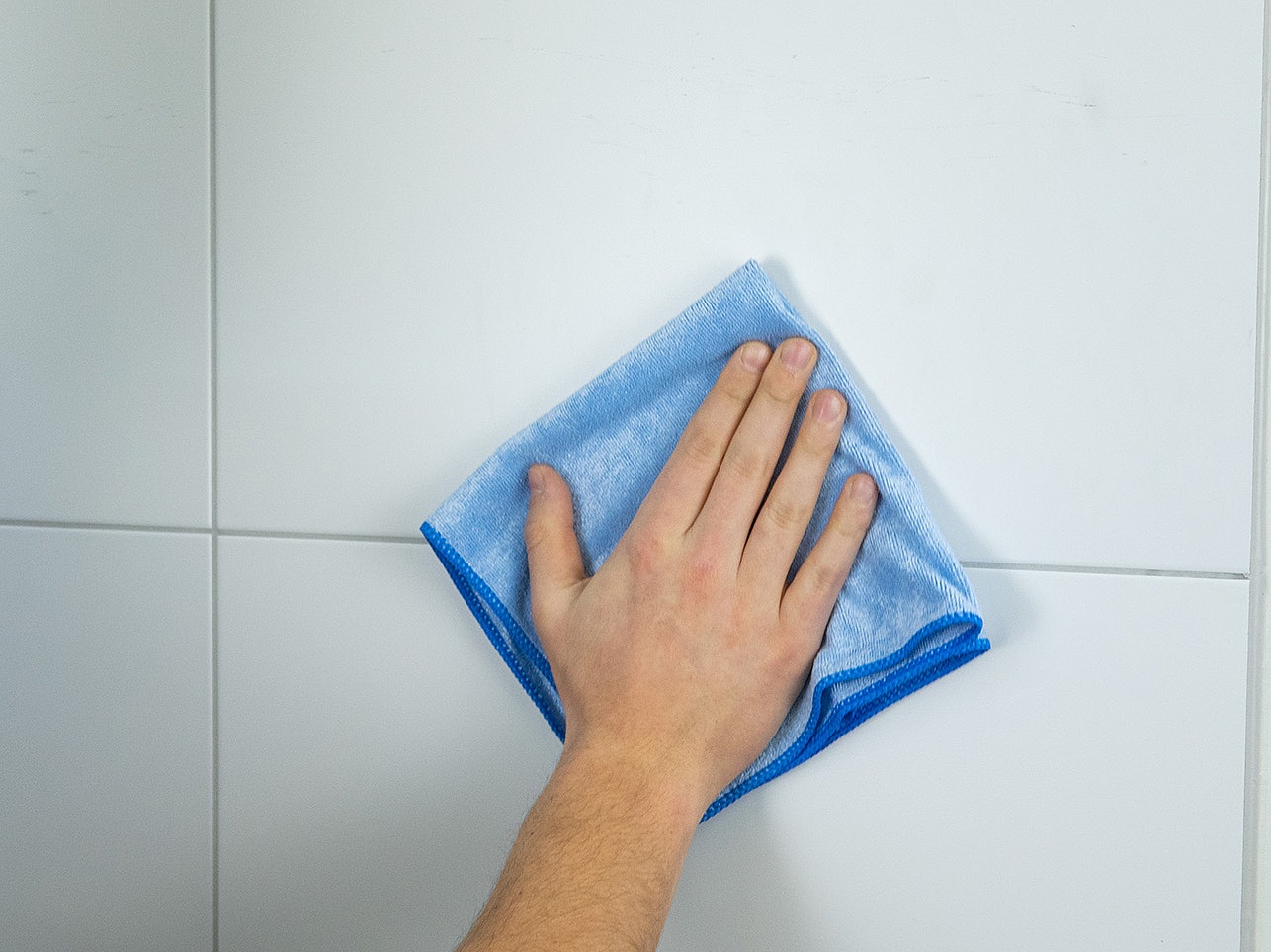
To ensure that no residues from conventional bathroom cleaners remain on the surface, we recommend cleaning the surface with the cleaning cloth supplied.
What types of substrates can the adhesive be glued to?
Substrates | Suitability |
Stoneware | ✅ |
porcelain stoneware | ✅ |
glass | ✅ |
Aluminium (composite panels) | ✅ |
Stainless steel | ✅ |
Resopal panels | ✅ |
Earthenware | ✖ |
Natural stone | ✖ |
Cement | ✖ |
Plaster | ✖ |
Wood (composite) | ✖ |
Plastic | ✖ |
Not suitable for glazed, polished, sealed, impregnated, coated, waxed or printed surfaces.